

Best Children's Books for 2026: Top Picks for Every Age
Table of Contents
- The 2026 Children's Book Landscape: What's Worth Your Shelf Space
- Quick Comparison: Top Picks for 2026 by Age Group
- 1. Award-Winning Picture Books That Set the Standard
- 2. Best Picture Books for Toddlers: Built for Tiny Hands
- 3. Engaging Early Readers and Middle Grade Gems
- 4. Young Adult Highlights and Coming-of-Age Stories
- How to Choose Quality Children's Books for Your Family
- Why Non-AI Children's Literature Matters More Than Ever
- Frequently Asked Questions
Last Updated: September 8, 2026
The 2026 Children's Book Landscape: What's Worth Your Shelf Space
The best children's books 2026 are about intentional storytelling that meets kids where they are developmentally. As a new publisher founded in 2025, Quill and Compass Books is dedicated to creating heartwarming, wholesome stories that nurture curiosity, kindness, and creativity in young readers. The most exciting trend is a shift away from mass-produced, AI-generated content toward hand-crafted narratives that respect a child's intelligence.
Parents want to know who wrote the story, how it was illustrated, and whether it will spark curiosity. A quality children's book builds vocabulary, introduces themes like kindness and resilience, and creates a shared reading experience.
Quick Comparison: Top Picks for 2026 by Age Group
Choosing the right book often comes down to matching the format and reading level to your child's current stage.
Age Group |
Top Pick Focus |
Key Feature |
Best For |
|---|---|---|---|
0-3 Years |
Toddler Board Books |
Durable, chew-safe pages |
Sensory exploration and durability |
3-5 Years |
Picture Books |
Visual storytelling and read-aloud rhythm |
Building vocabulary and attention span |
6-8 Years |
Early Readers |
Short chapters and engaging plots |
Independent reading confidence |
9-12 Years |
Middle Grade |
Complex character development |
Social-emotional learning and empathy |
13+ Years |
Young Adult |
Coming-of-age themes |
Navigating identity and independence |
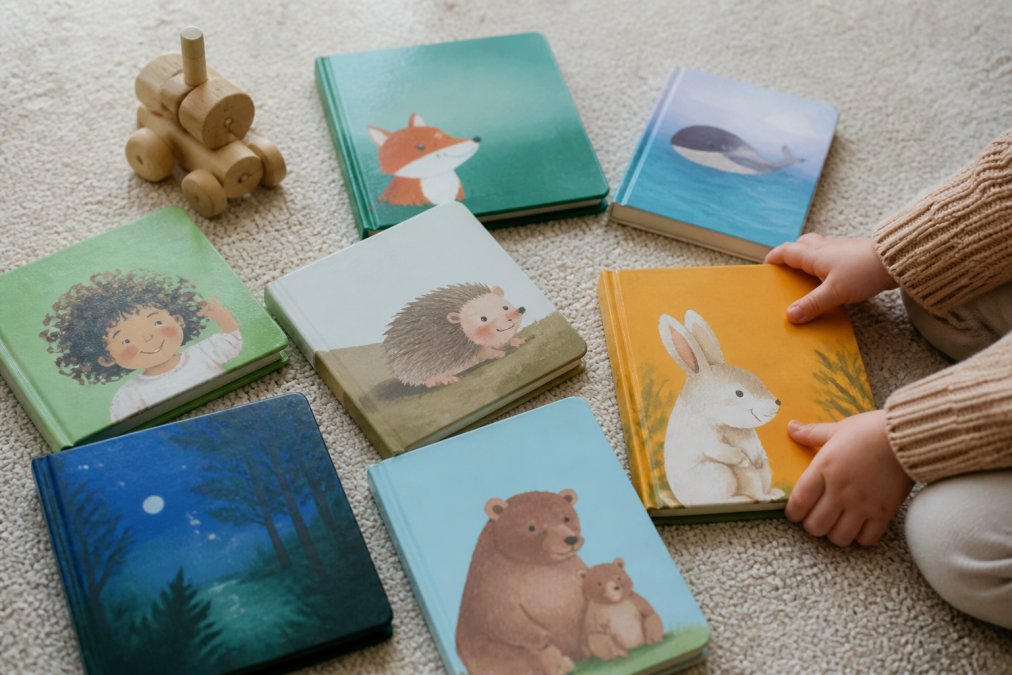
If your toddler is still mouthing everything, prioritize the board book format over paper pages, regardless of how beautiful the hardcover edition looks on the shelf.
1. Award-Winning Picture Books That Set the Standard
The American Library Association (ALA) announces Youth Media Awards, highlighting books with exceptional literary and artistic merit (ala.org). Vetted by librarians and educators, these titles can be a shortcut to quality.
Honor Books and Notable Mentions
For a comprehensive list of all 2026 award winners and honor books, the American Library Association's award criteria provides the full roster. When evaluating these critically acclaimed titles, look beyond the shiny sticker on the cover. A true award-winning picture book uses the interplay between text and image to tell a story that neither could tell alone. Ask yourself: Do the illustrations advance the plot, or do they merely decorate it? The best illustrators of 2026 are pushing the boundaries of visual storytelling, using diverse voices and varied artistic mediums to capture the imagination.
2. Best Picture Books for Toddlers: Built for Tiny Hands
For the toddler set, the best picture books for toddlers prioritize durability and interactive elements as much as the story. This is the age where books get thrown and chewed, so a sturdy board book format is non-negotiable. Content must hold attention against screens; look for rhythmic text, bright but not overstimulating illustrations, and simple cause-and-effect narratives that invite participation.
A common mistake is buying books that are too advanced for a 2-year-old's attention span. If your child prefers YouTube to sitting still, start with books that have fewer words per page and encourage physical interaction, like lift-the-flap features or textured pages. The goal is to build the habit of sitting with a book, even if it is only for a few minutes at a time. For guidance on developmental milestones in early literacy, resources like Reading Rockets' early literacy development guide offer research-backed strategies for engaging reluctant readers.
Avoid "board books" that are simply paperbacks with thick covers. Check that the pages themselves are made of dense cardboard, as this is what survives aggressive page-turning and the occasional bite.
3. Engaging Early Readers and Middle Grade Gems
Early Readers (Ages 6-8): Building Stamina and Confidence
For ages 6-8, look for short chapters with cliffhanger endings that motivate a child to read "just one more page," building stamina and fluency. The standout early reader of 2026 is The Great Pencil Caper by Kate DiCamillo, a mystery that follows a classroom pet hamster who must solve the case of the missing art supplies. DiCamillo's signature wit is on full display, and the chapters are perfectly paced for a newly independent reader. Another strong pick is Milo and the Moon Machine by Kwame Mbalia, a science-fiction adventure that introduces basic engineering concepts through an engaging narrative. For children who prefer non-fiction, The Big Book of Backyard Bugs by Jason Chin (illustrator of the Caldecott Honor book mentioned above) pairs stunning close-up photography with accessible text about common insects.
Middle Grade (Ages 9-12): Depth and Social-Emotional Learning
For ages 9-12, middle grade novels increasingly address social-emotional learning, exploring friendships, family dynamics, and resilience authentically. The most engaging stories of 2026 feature protagonists who face realistic problems and grow through their decisions. The Cartographer's Daughter by Erin Entrada Kelly (the 2026 Newbery winner) is a must-read, but for a different flavor, consider The Last Wild Orchestra by Tae Keller, about friends who stage a play to save their town's community center. Keller handles grief and friendship with remarkable subtlety.
A Unique Angle: Neurodivergent-Friendly Reading Lists
We also see a growing trend toward neurodivergent-friendly reading lists, with books designed for children who process language differently. This is a gap most generic lists miss, but it is a high-utility angle for parents of children with ADHD, dyslexia, or sensory processing differences. When curating for this audience, look for:
- Clear Formatting: Books with larger font sizes, wider line spacing, and cream-colored paper (rather than bright white) reduce visual stress.
- Predictable Structures: Stories with clear chapter goals and recurring character routines help children with executive function challenges follow along.
- Validating Narratives: Books that feature neurodivergent protagonists who succeed because of their differences, not in spite of them, are invaluable for self-esteem.
A standout example for 2026 is The Focused Mind by Ali Benjamin, about a boy with ADHD who discovers his "scattered" brain is his greatest asset when he joins a robotics team. The non-linear narrative mirrors the protagonist's thought process. For younger readers, Sensory Superpowers by Lindsey Rowe Parker celebrates a child's heightened senses as tools for exploration. These titles foster empathy in all readers.
4. Young Adult Highlights and Coming-of-Age Stories
How to Choose Quality Children's Books for Your Family
Choosing quality children's books involves trusting your instincts and doing homework. Look past marketing hype and bestseller charts; popularity does not equal quality. Read the first few pages aloud. Does the language flow naturally? Is the vocabulary rich but accessible? Examine the illustrations. Are they integral to the story, or just decorations? High-quality visual storytelling enhances the text.
To help you evaluate your options, use this simple framework:
- Check the Age Range: Verify the publisher's suggested reading level, but also consider your child's specific interests and attention span.
- Look for "Created by Humans": Check the copyright page or author bio to confirm a real author and illustrator created the book, not an AI algorithm.
- Assess the Physical Quality: For younger kids, feel the weight of the paper and the binding. A quality hardcover or thick board book will last through multiple reads.
- Read Reviews for Content: Look for reviews from educators or librarians, not just parents, to get a sense of the book's educational value and thematic depth.
Don't overlook your local library as a testing ground. Borrowing a book before you buy it is the best way to see if it will actually engage your child, saving you money on books that miss the mark.
Why Non-AI Children's Literature Matters More Than Ever
The conversation around children's books has been fundamentally changed by generative AI, making non-AI children's literature a crucial consideration. When you choose a book written and illustrated by a human, you choose a story born from lived experience and genuine emotion. AI-generated content often lacks the subtle emotional beats and narrative coherence that come from human understanding. The choice to buy human-made books is an investment in the future of storytelling.
This is where publishers like Quill and Compass Books are making a stand. Our commitment is to wholesome storytelling that nurtures curiosity and kindness, crafted by real authors and illustrators who understand the weight of a child's first books. We believe that the stories we share with our children shape their capacity for empathy and imagination, and that is too important to leave to an algorithm. When you support independent publishers who prioritize craft over cost, you are helping to ensure that the next generation of readers grows up with a diverse and vibrant literary landscape, one filled with the warmth of a human touch.
Frequently Asked Questions
What are the top-rated children's books released in 2026?
Top-rated releases span several categories. For toddlers, seek durable board books from independent publishers known for quality control. Award lists and curated collections from trusted booksellers can offer a strong starting point for finding critically acclaimed titles.
How can I identify high-quality children's literature for my child?
Evaluate children's books by examining the quality of writing, the originality of the story, and the craftsmanship of the illustrations. Check the publication date and author background, and look for books that promote social-emotional learning. Reading reviews from librarians and educators helps. Also, consider the book's physical durability, especially for toddlers, and verify it is written by a named human author.
Why is it important to choose non-AI written books for children?
Non-AI children's literature is crafted by human authors and illustrators who bring personal experience, emotional depth, and intentional narrative arcs to their work. These stories offer authentic character development and thematic elements that resonate on a human level. Choosing non-AI books supports real artists and ensures your child experiences storytelling that is original, heartfelt, and designed to nurture curiosity and empathy.
What are the best picture books for toddlers in 2026?
The best picture books for toddlers combine engaging stories with durable, toddler-safe construction. Prioritize board books with rounded corners and sturdy pages that survive chewing and throwing. Look for simple, rhythmic text and high-contrast, colorful illustrations that hold attention. Books that explore daily routines, emotions, and simple concepts are excellent for this age group, encouraging interaction and vocabulary building.